Showing posts with label Film. Show all posts

Saturday, October 10, 2009

Movies... I see movies...


I don't know why it took me so long to see The Seven Samurai, but yes, here I am seeing it for the first time at last. I loved it. I can see how it is named one of the most influential movies of all time. The acting, storyline, and cinematography are superb. I loved the little quiet moments and the big battles. Each character was unique. Perhaps the only thing that was missing for a Western viewer was a little bit of historical context, things that the Japanese would know as a matter of course. If this were a Western movie, we'd have more narrative about why the ronin were wandering homeless, why there were such significant class divisions, and why the women accepted their treatment as lesser citizens. But that is beside the point. The challenge and the pleasure of watching foriegn films is that you do not get these explanations; you must rely on what little personal knowledge informs you, and let the film play out, hoping that you will gather further understanding as you go. And if you don't, well, I guess that means you have some homework to do later...


Ahh, Dexter. What an enigmatic character. The show is already in its fourth season and I have barely dipped my toes in season one. There is something deeply disturbing and yet strangely satisfying about a detective who is an expert at finding serial killers because he is a serial killer himself. But a killer with a conscience; a vigilante seeking justice for the innocent. Fascinating.


Doctor Who: Carnival of Monsters
This was a good, solid tale set in the Who-universe of Doctor Number Three, Jon Pertwee. Like all good Doctor Who tales, it begins with a good story; so we can forgive the clunky special effects (which were actually quite good for their day) and the slow-paced dialogue. It's hard to step back from the high-octane adrenaline rush of the new series, but nevertheless it is a pleasure to see the Doctor save the universe no matter what incarnation he's in.


Friday, November 7, 2008

Nobody Ever Brings Anything Small...


Harvey and I sit in the bars... have a drink or two... play the juke box. And soon the faces of all the other people they turn toward mine and they smile. And they're saying, "We don't know your name, mister, but you're a very nice fella." Harvey and I warm ourselves in all these golden moments. We've entered as strangers - soon we have friends. And they come over... and they sit with us... and they drink with us... and they talk to us. They tell about the big terrible things they've done and the big wonderful things they'll do. Their hopes, and their regrets, and their loves, and their hates. All very large, because nobody ever brings anything small into a bar. And then I introduce them to Harvey... and he's bigger and grander than anything they offer me. And when they leave, they leave impressed. The same people seldom come back; but that's envy, my dear. There's a little bit of envy in the best of us.
~Elwood P. Dowd


Friday, August 8, 2008

Steve Reeves is God


It was "Spookfest Friday" at Dann & Maurine's and we indulged ourselves in two Popeye cartoons, one really *awful* science fiction (and I use the term lightly) serial, and two Steve Reeves movies: Morgan the Pirate and The Thief of Baghdad. The dialogue was terrible (and poorly dubbed!), but the eye candy was *totally* worth it. (Actually, Thief of Baghdad was creative and fun--not bad for 1961).

Allow me to artfully shred that shirt a little more, Mr. Reeves... More body oil?... Why, certainly...


22 Days til the Burn!

Thursday, August 7, 2008

Postcards from the Labyrinth


Today was my last day of teaching the 7th and 8th grade book clubs. We brought in snacks and movies to celebrate. I was surprised--pleasantly--that they chose to watch the older Labyrinth over the more recent Stardust. (The first question they ask when I tell them about a book or movie is, "When was it made?") They were shocked when I told them the movie came out when I was a teenager. I had a hard time convincing them that I used to look like Jennifer Connelly. (Have I really changed all that much?)

Even as I pressed play, I had my reservations. I thought, These kids are too sophisticated. They'll hate it and end up mocking one of my dearest pieces of nostalgia. But I was wrong. They were enchanted. They loved the goblins. And Hoggle. They thought the Goblin King was played by Michael Jackson. No, I told them, that's David Bowie. Is he dead? they asked. No, he's still very much alive and enjoying an active career. (They found that less likely than believing in goblins and skipped past the singing bits). There were some tense moments. "I'm going to have nightmares!" one boy exclaimed. There was laughter--not mocking, but from genuine pleasure.

As I watched them from the back of the room, huddled together in the dark, fidgeting and commenting (and then shushing), no more able to keep their thoughts to themselves than their hands and feet, it occurred to me that there is a remarkable similarity between children and goblins. Perhaps the reason why a 22-year-old movie can still have such appeal is related to how keenly children enjoy having that part of themselves reflected back at them off the screen--that maddening, mischievous, magical part.

And as for me? Well...

"Through dangers untold, and hardships unnumbered, I have fought my way here to the castle beyond the Goblin City..."

I am no longer that naive, lost young girl. I made it there sure enough. Come to think of it, it could be I never left. Maybe if I stick around long enough, the goblins will make me their Queen.


23 Days til the Burn!

Friday, August 1, 2008

A Midsummer Night's Posting

My summer so far...

In Birthdays
My son’s 16th birthday was spent at BayCon over Memorial weekend (Actually, his birthday is May 30, which usually falls on Memorial weekend, but didn’t this year...). Brave soul that I am, I allowed him to invite two or three buddies to accompany him. So while I pecked away at my final term paper back in our hotel room, he and his friends ran amuck in the Santa Clara Hilton: “boffering” (beating each other with padded weaponry); picking up on chicks... er... making new friends with girls in bizarre costumery; and conducting a variety of experiments testing the nature of reality. Of the latter, one example involved (I am told) a trail of Mentos leading between the doors of two adjacent elevators in the effort to trap a Japanese businessman in an endless loop at 6:30 in the morning (the experiment failed, lacking the appearance of said businessman). Another involved a conversation Jared overheard while resting/hiding under a table during a brief respite from an elaborate game of hide and seek. The conversation, between a man and a woman, discussed the topic of reality. Unable to resist, Jared poked his head out from under the tablecloth and, quoting our favorite SF radio show Ruby, said, “Reality is what everyone agrees is real; what everyone agrees is not real, does not exist.” The man said, “Good point!” And Jared retreated back into his hiding place. You see, things like this can happen at a science fiction convention without anyone batting an eye. And *that*, I think, says more about the nature of reality than a stack of philosophy books.

My 41st birthday (July 26) was spent in my home with good friends old and new. We drank wine and ate tasty things and talked about travel and writing and other creative projects... Along with completing another Darkover novel, finishing up her own science fiction trilogy, and editing a second volume of Lace & Blade, Deborah is also actively supporting Live Long n Marry, Afghans for Afghans and Mother Bear projects. (These are truly wonderful grass roots organizations– click on the links to find out more)... While still maintaining the Joseph Mazzello fan club and website (which he originated back when Joseph was a wee lad), Mike is working on a new screenplay. (I can’t wait to read it, Mike!)... Guy’s wife Danielle and daughter Camille just got back from a trip to Mexico: part Spanish immersion, part art studio/museum tour. At an aquarium, Camille was actually lowered into a tank to feed the sharks! Way to go, Camille! Now Guy and Danielle are headed off to Sweden... Pete will be heading back to Singapore on business once again, while his wife Chris continues teaching music and a wonderful new dance form combining flamenco and belly dancing. (I have to take this class!)... Tony will be continuing his percussion training in the Fall, which gives our band such wonderful rhythm and keeps us all in synch... And Isabel, my Cabaret sister, is always on the lookout for another show to display her fine singing, dancing, and acting talents... But I have to say the prize for the evening went to Guy and the original limerick he read in my honor... ;-)

In Books
For the summer book clubs I’m teaching, I’ve read (and recommend highly!):

Whale Rider by Witi Ihimaera
Under a Blood Red Sun by Graham Salisbury
Seventh Son by Orson Scott Card
Goose Girl by Shannon Hale
This Boy’s Life by Tobias Wolff
The Secret Life of Bees by Sue Monk Kidd
A Separate Peace by John Knowles
Elsewhere by Gabrielle Zevin

Of the above, it’s hard to pick a favorite– they were all wonderful– but if I had to pick one it would be Goose Girl, the one based on the Grimm’s fairy tale (of course!).

For myself, the little casual pleasure reading I’ve done has included:

Finishing Jonathan Strange & Mr. Norrel by Susanna Clarke
Starting Declare by Tim Powers (actually almost done with this one)

The former I couldn’t put down; the latter I’ve had to put down again and again. I can’t tell at this point if it’s just my schedule interferring with it, or if the book just hasn’t engaged me all that much. Fascinating premise, though.

I really should be studying. Really, really.

In Film
After a semester of Middle East studies, and watching films like The Battle for Algiers, and The Prisoner, and Until When..., I just haven’t been able to embrace my usual preference for foreign and indie films. So when I do get out to the movies, it’s been to see lighter fare: Iron Man, Indiana Jones, Wall-E, and The Dark Knight. I do love comic book heroes. And I’ll never tire of really well done animation.

In Music
Shadow Opera is doing great! We’ve been practicing new songs and keeping the old ones sharp. We had one really nice gig at Clos la Chance winery in San Martin in June which went really well. The crowd was very attentive and gave us some great feedback. One guy (a David Bowie fan) even ran in from the parking lot when he heard us playing his favorite song! (Ziggy Stardust, of course!) Later, when I sang Five Years, I dedicated it to him. We’ve done other smaller gigs– one at the bookstore and the other at community park– but the audience was somewhat lacking. We’ll be on a hiatus in August while Guy and Pete are out of the country, but hopefully we’ll get back to performing once September rolls around.

Hitting Things With Sticks– Who’d have known this was so fun? While Jared has been back east, I’ve sat in for music lessons with his guitar instructor. He’s teaching me some basic percussion. I joined the group session last Thursday and got to play along with the other students in a band setup. What fun! And I could actually hold the beat. What a surprise! I really should have done this as a teenager– puberty would have been so much more tolerable if I could have taken out my frustrations on clashing cymbals and other clickety-clackety things. This could be dangerous though... I think I’m getting a fever... and the only perscription is: MORE COWBELL!!!

On a classical note, I’ve managed to see the San Francisco Symphony twice this summer, once at the Flint Center in Cupertino and once at Cesar Chavez Park in San Jose. The Flint Center performance was a Cello concerto. I loved Lutoslawski’s Mi-Parti (1976)– It sounded like it could be part of a movie soundtrack for Star Wars or Harry Potter. I could *totally* picture Luke Skywalker stepping into the tree on Dagobah in Empire. Considering the time period, I wonder if John Williams was influenced by Lutoslawski. Mi-Parti was followed by Janacek’s Taras Bulba (1918); but the highlight of the evening was Dvorak’s Cello Concerto in B Minor, Opus 104 (1895). The beautiful Alisa Weilerstein played the lead cello. She was amazing. For a moment, when she first came out and faced the audience, you could tell she was aware of us, she took us all in. But as soon as she began to play, you could tell she was somewhere else entirely, transported into her music. And she took us along for the ride. It was as if the music came alive and the notes were dancing and swirling in the air around her. Her performance was so captivating, we completely lost track of time. Suddenly, it was over, and the audience was on its feet cheering. Brilliant!

The concert in San Jose was lovely as well– a Tuesday afternoon in the Park with Verdi, Dvorak, and Tchaikovsky:

Verdi Overture to La forza del destino
Dvořrák Allegra con fuoco from Symphony No. 9, New World
Tchaikovsky Andantino in modo di canzona from Symphony No. 4
Tchaikovsky Finale: Allegro con fuoco from Symphony No. 4

I was talking with my bandmates about this recently– How artists see music. Some artists say they see it in colors, others as language or mathematical formulae; some, like Tori Amos, meet actual personalities in these sonic shapes. Me, I see landscapes. When I listen to music, especially classical music, but other kinds of music as well, it feels similar to when I’m sitting in an IMAX theatre with the camera skimming over the surface of some intricate geography– but I don’t see colors or definition, just a sonic impression, like a bat’s sonar, perhaps. It’s easy to get lost in it; sometimes I don’t want to come back. ;-)

In Scholarship
In June, I attended the Children’s Literature Association’s annual conference, held this year in Bloomington, IL. I submitted a paper discussing Icelandic children’s literature, and was invited to join their international panel focusing on Iceland. The other two scholars were from the University of Iceland– Anna Heida Palsdottir and Dagny Kristjansdottir– and they told me later I was this big mystery: Who else could possibly know about Icelandic children’s literature? Was I Icelandic? ;-) I felt a bit like Cinderella. We went to lunch and I told them about my trip last summer.

I had a wonderful time and met many scholars from all over the world: Iceland, Russia, Greece, Canada, Ireland, and all over the U.S. I met award-winning author Peter Dickinson from England. And I had the good fortune to get reaquainted with my friend Susan from my trip last year. We booked a room together– and after my crazy (mis)adventures with the delayed flights and losing my cell phone, it was such a relief to arrive and find she had my bed all ready and a note telling me there were snacks in the fridge. ;-) (Thanks, Susan!)

(Note to Self: Next time, pack lighter, wear running shoes, and put cell phone in the *inside* pocket...)

In Teaching
As I mentioned earlier, I’m teaching summer reading courses for an SAT prep school. My students range in age from 11-16. I like the junior high kids the best. They are so full of personality. They are both maddening and enchanting at the same time. And they can’t shut up to save their lives. Really. I’ve threatened them with all manner of torture and punishment; nothing works. One of them, the youngest, said to me one day, “Don’t you just love us, Miss Tanja? Haven’t we changed your life?” Yes, Justine. Absolutely.

In Writing
Last semester, my short story “The Kindly Ones” and my long poem “Denmark, On My 40th Birthday” each won first place in the English Department’s Phelan Awards.

Also, I am now a regular contributor to Bookbird, an international children’s lit magazine. I submit what is called “postcard” reviews (about 150 words). My first review should be coming out in the Fall issue. It’s pretty exciting. *International* publication. Wow.

Now if only I can get one of my stories published...

So that’s it. That’s the update. Until next time...


29 Days til the Burn!

Saturday, May 3, 2008

Iron Man and the Hollywood Arab Stereotype


Okay, at the risk of incriminating myself, I went out to the movies last night... (Instead of working on my homework? Gasp!)
;-)

It was all in the name of *research*! Yeah, that's it!
;-)

Anyway, I saw "Iron Man."

A portion of the movie takes place in Afghanistan. I made it a point to pay attention to the images they presented of the Arab characters as this is something we have been examining in my comparative literature course this semester. This, of course, distracted me from the purely visceral pleasure of watching a comic book hero movie; I hope you appreciate my sacrifice. ;-)

So, with my graduate hat on ...

I noticed that the filmmakers attempted to be even-handed about it. The bad guys are not introduced as Afghanis but under the title of their resistance movement (The Nine Rings, or something of that nature). However, the first and most prominent image we see--and in larger numbers--is the stereotypical terrorist figures: Arab men with weapons fighting from desert caves and willing to do anything they must, including torture, to get what they want. We are presented with some images of the "innocent" Afghanis--the helpless refugees torn from their homes--but this is done by the bad guys, their own people. And it takes an "American" hero to come in and save them. If they had left it at these polar opposites, I would be more critical; however, they also included an "intellectual Arab", a doctor, an educated man, who helps our hero and even lays down his life for the cause. But even this could fall under some criticism, because, after helping our hero, there seems to be nothing left for him to do but die.

Robert Downey, Jr.'s character does have an interesting arc-- he starts out as a heartless weapons dealer but then has a sudden change of heart when he discovers that his own weapons are being sold to the "enemy." But his moments of reflection are neither loud enough nor pointed enough. And the ultimate "enemy" (caution: spoiler alert) turns out to be an American, but an American *businessman* NOT the government. I must applaud the filmmakers for attempting something of a mildly subversive theme, but ultimately this is an action movie and not too many people are going to be thinking that deeply about it.

What I found most disturbing is how the audience (mostly young people) laughed every time the Arab bad guys were killed.

For the comic book genre of films, this is one of the better ones, and you can just sit back and enjoy it. We do like our heroes: The American maverick with ingenuity out to save the world from evil and injustice. But I got to thinking... Wouldn't it be a refreshing change to see an Arab maverick with ingenuity save the world? That would be a different movie indeed.


Saturday, March 8, 2008

"If my life wasn't funny, it would just be true."

~Carrie Fisher, Wishful Drinking
Berkeley Rep, 8pm


Tuesday, March 4, 2008

Cinequest: The Call of Cthulhu

"In his house at R'lyeh dead Cthulhu waits dreaming."


"That is not dead which can eternal lie,
And with strange aeons even death may die."

Based on H.P. Lovecraft's classic horror story and filmed as a silent picture as if the film were made when the story was written in 1927, The Call of Cthulhu is a work of creative genius. What makes it unique is the work itself: they just don't make film narratives like this anymore. Heck, they don't make book narratives like this anymore.

The plot moves forward with slow deliberation, as layer after layer of mystery is peeled away by a succession of characters, each of whom has his own story to tell. First is the Nephew, who is relating his tale to a man he has hired to destroy the research papers he has inherited from his Grand-Uncle. The narrative then turns to the Grand-Uncle's tale, who in turn relates the narratives of a young Boston man plagued by strange dreams, a Professor of Anthropology, a Police Inspector, and finally the Second Mate of a Norwegian ship. The narrative then returns to the Nephew who concludes by urging once again that the papers be destroyed.

What I found fascinating about this approach is that while most of our modern tale-telling retains a somewhat equal level of complexity--flashback, flash forward, reverse narratives, and so on--we, the audience, experience the events as they are happening. There is rarely a sense that someone is relating something that has already happened. Even when characters catch up to one another, we expect them to paraphrase or relate their adventures off screen: There is no need for us to witness it again for we have already seen it. There is a Show-and-Tell quality to old-style film making that is absent from the newer Show-Don't-Tell philosophy. And in response to this rapid, visual-based storytelling in film, books have also sped up their narratives and shifted to more image-based (rather than language-based) plots.

Another thing I found clever about their using the silent film format to tell this story is that we never hear anyone pronounce the nearly unpronounceable word "Cthulhu." I made it a point to listen to others' pronunciation when buying my ticket at the Box Office: we all mangled it. But perhaps that is a blessing. Perhaps pronouncing the name aright would summon the alien-beast-god from the pit.

Finally, I would like to close with a quote from Lovecraft's story, which was also used in the movie. It puts a finger, I think, on the horror we humans feel for too much enlightenment. I don't know if I entirely agree with it, but it certainly illuminates the tension we see between those who are pushing forward for scientific discovery and those who are recoiling from it.

"The most merciful thing in the world, I think,
is the inability of the human mind to correlate all its contents.
[...] some day the piecing together of disassociated knowledge will
open up such terrifying vistas of reality, and of our frightful position therein,
that we shall either go mad from the revelation or flee from the deadly light
into the peace and safety of a new dark age."
~H.P. Lovecraft


Director Andrew Leman Producer Sean Branney, Andrew Leman Executive Producer Sean Branney, Andrew Leman Co-Producer Chris Lackey Writer Sean Branney Cinematographer David Robertson Editor David Robertson Cast Matt Foyer, David Mersault, Patrick O'Day Film Info 47min

Monday, March 3, 2008

Cinequest: The Substitute

The ominous "Ulla" -- Hide your chickens... er... and your children.

This film offers nothing new as far as it premise: The "my teacher is an alien" bit has been done--and overdone--for years now. But what it does offer is a fresh dollop of humor and a superb cast. The special effects aren't bad either.

Paprika Steen is perfect as the malevolent and sadistic "Ulla," the substitute teacher who turns up when the children's regular teacher falls ill suddenly from a case of salmonella poisoning (reference to salmonella becomes a subtle ongoing joke as certain inconvenient adults fall prey to this illness). The children know something is up from the first day; however, they are unable to convince their parents of this. There is a wonderful scene in which the kids and the parents are shouting at each other from across a room, the parents trying to be the voice of reason while the kids are trying to relay the reality of their situation. A truer representation of the generation gap was never seen.

Despite the efforts of the kids to expose her, Ulla always manages to stay one step ahead. After the children witness her consuming a live chicken in her gutted and unlivable house, they convince their parents to confront her once again. But of course, by the time they arrive, her house is neat and clean and perfectly presentable. Ulla uses tears and little jokes to completely disarm them. In one hilarious moment, she comes creeping out of the kitchen, growling, with big monster gloves on her hands. After their initial fright, the parents collapse into laughter, convinced once again of their children's overactive imaginations.

Jonas Wandschneider--reminiscent of a young Elijah Wood--is brilliant as Carl, a gloomy boy still trying to come to terms with his mother's recent death. His drive to expose his teacher as an alien intensifies when she starts dating his dad. Another hilarious moment results when he confronts her over dinner when his father leaves the room. "I know you're an alien," he challenges her. "You mean, like this?" she replies. Suddenly, her face erupts into dozens of tentacles that whip out across the table to roar in his face. Moments later, when his dad returns, Ulla is calmly sipping her wine while Carl is collapsed back in his chair, catatonic with shock.

The special effects are nicely done. There is never a sense that this is a low budget production, but neither do they rely on the effects to tell the story. The best bit is the arrival of Ulla's spaceship, a round silver ball which drops through the atmosphere like the ball of a pinball machine. The arrival of the spaceship is shown almost entirely from the point of view of a chicken out in a field, the only being to witness its arrival. Space invasion from the perspective of a chicken--I can't believe that has ever been done before. (I won't tell you what happens to the chicken--I'm sure you can guess).
The premise that the alien is here to discover why humans have love and empathy (the aliens only know war and hate) is a trifle heavy-handed, but it is kept to the background and doesn't interfere with the overall humor and suspense of the film.

Perhaps the best scene of all is when the children are being loaded onto the bus for their field trip. The parents think their kids are going to Paris, but the kids all know by now that Ulla is kidnapping them to her homeworld. The kids are all wailing and crying; some have to be dragged bodily onto the bus. One boy states, matter-of-factly, to his parents, "Once you realize you have sent your son to his death, you'll be sorry. You'll realize you were entirely reponsible. I feel sorry for you. Goodbye." Then he stalks onto the bus. The parents wave and smile, bewildered, as the bus pulls away, while the kids stare forlornly out the windows, glum faces pressed up against the glass. Just puts a whole new spin on the words "field trip," doesn't it.


Director Ole Bornedal Producer Michael Obel Executive Producer Michael Obel Writer Ole Bornedal, Henrik Prip Cinematographer Dan Laustsen Editor Thomas Krag Music Marco Beltrami Cast Paprika Steen, Ulrich Thomsen, Jonas Wandschneider, Sofie Gråbøl, Sonja Richter, Olivia Stenderup Garre Country Denmark Language Danish with English subtitles Film Info 93min Genre Sci-Fi


Saturday, March 1, 2008

Cinequest: The Aerial


The sinister Dr. Y


Director Esteban Sapir has created a visual tour de force in The Aerial. This film quite simply blew me away both in story and style. It begins, like all good stories, like a fairy tale. A book is opened and the city stands up like a pop-up. The inhabitants of the city have been robbed of their voices. The story is told like a silent film, with subtitles appearing on the screen, but the characters have a unique ability to interact with them, gathering them in their hands or nudging them to one side. In the absence of sound, words take on a more physical aspect, and communication between people does so as well. The soundtrack is used well to this affect, also; for instance, when Mr. TV draws a question mark on the fogged up window of his car, we hear the screech of violins.


There are so many odd and delightful little moments it is impossible to recount them all, and really not necessary. This is a film to be experienced aurally as well as visually. And therein lies the irony: Sapir uses a visual medium to present a message about the power of words and the human voice. And while the conclusion is wholly satisfactory, there are still enough unanswered questions to leave one thinking about it for hours afterwards: Why is Mr. TV's chauffeur a rat? Why does the son of the Voice have no eyes? And why does Ana not give him the glasses meant to cure him? Why is the broadcasting equipment in the TV station shaped like a swastika, and the Aerial's like a Jewish Star of David? Who is the demented fairy (dancing in her glass bubble with a cap full of typewriter keys and a pacifier in her mouth) and what is her relationship to Mr. TV?


This is a brilliant, magical film. I hope I can find it on DVD one day, because it is worth seeing again.


Director Esteban Sapir Producer Jose Arnal Writer Esteban Sapir Cinematographer Cristian Cottet Editor Pablo Barbieri Carrera Music Leo Sujatovich Cast Valeria Bertuccelli, Alejandro Urdapilleta, Julieta Cardinali, Rafael Ferro, Florencia Raggi, Sol Moreno, Jonathan Sandor, Ricardo Merkin, Raul Hochman, Carlos Piñeyro Country Argentina Language Spanish w/ English subtitles Film Info 90min Genre Fantasy


Sunday, December 9, 2007

All that Glitters is not Golden


There is much that this movie gets right.

First, it is superbly cast: Dakota Blue Richards is an absolutely winning creature and the rest of the supporting cast were perfectly suited for their roles, especially Sam Elliot as the aeronaut Lee Scoresby (Elliot--like Alan Rickman as Snape in Harry Potter--I had pegged for the role as soon as I read the books. I love it when I'm right). Nicole Kidman as Mrs. Coulter is deliciously evil: you will love to hate her. (She hasn't had the opportunity to display such whiplash changes between sweetness and cruelty since To Die For). I am curious and mildly concerned about Daniel Craig as Lord Asriel. The film version is painting his character a little too admirably. In the books, he is just as despicable in his own way as Mrs. Coulter. It will be interesting to see how they handle things in the next film which, if they follow the books, will have to begin with his committing a very shocking murder.

The special effects are brilliant. The technology and gadgets of this alternative world are a delight to behold, and the costumes and decor are a sumptuous feast for the eyes. The fantasy creatures--both the whimsical and enigmatic daemons and the fearsome Ice Bears--are engaging.

The plot follows that of the book with a fair amount of accuracy, cutting a few corners where a film must, but reasonably so.

What disappointed me was the dialogue, so clunky it fell on my ears with a leaden thud. How many times do we have to hear that Lyra is "special", that there are mysterious "prophesies" about her? We can see that she is special easily enough, and as for the prophesies, mention them once and be done. Similarly, the "specialness" of the golden compass was harped on so continually it became tinny and redundant. "This is the golden compass: it tells the truth"; "This is the golden compass: you use it to see things." Enough! We can see what it does plainly enough when she uses it. There were too many trite, banal, and cliche lines to count. This script was desperately in need of a script doctor (or a script nurse at the very least, as Carrie Fisher would say).

I hope that the next two films will be better. Enough critics have commented on the problem that I hope they will take steps to make improvements. I will watch the films nonetheless; there is so much more to look forward to.


p.s. I am also tired of hearing the rabid Christians on the Internet harp on and on about the controversial "killing God" scene (which isn't going to happen until the third movie anyway). Saying Lyra goes a quest to "Kill God" is like saying Dorothy in the Wizard of Oz goes on a quest to kill the Wicked Witch. It's completely circumstantial. The thing that bothers me the most is how they are circulating emails (I just received one today) encouraging people to ban the movie (and the books) and protect their kids from "killing God in their hearts." First off, the movie is just a piece of Hollywood fluff and isn't enough to convince anybody to kill anything. Secondly, kids today either don't care or are intelligent enough to draw their own conclusions. Thirdly... ah, just read the damn books before jumping to inane conclusions and quit yer whinging.


Friday, November 30, 2007

Enchanted


This movie is just too funny. When I saw the first previews, I was skeptical. I thought, "Disney's cashing in on another princess." But no. Okay, maybe that, too. But the thing is, this really is a good movie. It's clever, and it's funny, and dang it if I don't still have the tunes running through my head. Plus I'm a sucker for a good fantasy, and this one delivers. Delightfully. In a frothy, musically, Disney-ish kind of way.

It is not, however, very scary. I am reminded of what a scholar I met in Europe this summer said regarding fairy tales. He said, "Danger without death is not a fairy tale." Think about it: All the really good fairy tales have death. So I am sorry to say--since I love Susan Sarandon in just about everything she's done--as the wicket queen, she never acheives anything above mild menace, even when she turns into a dragon. But perhaps this is just the perspective of a 40-year-old. If I was six I might have a different opinion.

Another thing I found mildly dispossessing was how the movie undercuts its own theme. It presents the idea--very cleverly, I thought--that maybe it might be a good idea if the prince and princess go on a real date before rushing into marraige--"you know, go someplace nice, like dinner, or a museum, or a movie, and talk about your interests, your likes and dislikes." But in the end (and I don't think I'm spoiling anything here because, after all, it is a Disney movie) the princess falls for main man Patrick Dempsey after knowing him only a brief period of time. So its counter-theme is, hard as we try to be reasonable creatures, ultimately we humans are ruled by our hearts.


Friday, October 19, 2007

The Demonization of Science


So I finally got out to see the third Resident Evil movie. And I took the trouble to watch the first two, even though the plot is fairly straightforward, just because I like to get the big picture. Granted, these films are not high Art, but they are viscerally pleasurable: the special effects are exceptional, the plot is passing fair, and the hero, Milla Jovovich, kicks ass. (I've been a fan of hers ever since she released a CD in 1997, but I digress...).

However, this movie (or rather, series of movies) got me thinking. Thinking the kind of thinks only my brain can think. We know, don't we, that every era produces movies, especially science fiction movies, that reflect the fears of our age. For instance, The Day the Earth Stood Still wasn't really about our fears of alien invasion, it was about our fears of the Russians. I've read this somewhere-- don't ask me to quote my sources now. So.... what are the movies of today revealing about our fears now?

Whenever we look at a monster movie, the monster isn't really a monster, is it? The monster is us, it's that through-a-mirror-darkly image that reflects back at us in our darkest hour. The monsters in this movie, the mummies, are denied their humanity by a genetically engineered virus. Within hours of exposure to the virus, people are reduced to mindless, ravenous creatures with only one crude, overwhelming need: the need to feed. The mummies stagger through the streets, still wearing the clothing of their previous lives. I don't believe I am mistaken in suggesting there is some cultural criticism going on here. We have become a nation of mindless consumers. If we're not careful, we could become mummies; perhaps we already have.

That was the more obvious observation (along with the desert setting of the third movie--hmmm. Wonder why they did that?). But more disturbing to me is the underlying theme that science is dangerous and evil. The scientists in these films are amoral--even immoral--whose only concerns are with the success of their project. The corporations that back them are only interested in their bottom line. The computer program in charge of security will do what is most expedient, including killing humans, in order to protect the project. Although one could argue that science produces both the T-virus that creates the mummies and the anti-virus that reverses the process, showing that some good can come from experimentation, we are presented on the whole with an overwhelming number of images and characters representing science as a malevolent entity. This is the Mad Scientist motif at its very worst.

Meanwhile, back in the real world, science is struggling. It is under attack in our schools. People fear what they do not understand, and they do not understand science. So an uneducated populace dismisses it as worthless. Projects that could ultimately benefit humankind go unfunded by a government that is incapable of understanding it (and cherry picks only what it sees as useful to the war machine). Laws are passed limiting funding in research. These things are all connected. We are reaching forward technologically faster than our scientific understanding can keep up. The system seems headed for a breakdown.

That's why I find it disturbing that movies like these reinforce the idea that science is evil. The population at large is already confused, undereducated, and fearful about the subject.

On the other hand, Milla's character Alice is a paradox. She, too, is a product of science. She was infected with the T-virus, but her DNA has assimilated it and she has evolved into some advanced form of human. She is stronger, faster, and possesses psionic powers. There is a telling scene where she regains control of her body by mentally shutting down the satellite that sends orders to the chip in her brain (put there by the "evil" scientists in an effort to control her). A definite victory for the human spirit over technology. And yet that power was given to her by science.

I guess the connection that needs to be made is that science is just another extension of the human spirit. And that is something not to fear, but to celebrate.


Sunday, September 9, 2007

Starlight, Starbright...


You know, every time I read a reviewer's complaint that a movie's plotline is too "convoluted", I begin to wonder if they all have the mental capacity of a teaspoon. Stardust was brilliantly executed, with a very straightforward plot, and, from what I can remember, follows the book closely (with only a few minor variants). Charlie Cox is charming as the young hero, Claire Danes is quite fetching as a blonde and simply can do no wrong in my book, and Michelle Pfeiffer exceeds expectations in a role that was clearly written just for her. This one has a spot reserved on my DVD shelf for sure.

Two thumbs way up!


P.S. Of course, the Number One reason to see this film is Robert De Niro! He is perfectly hilarious!


Saturday, August 25, 2007

Why are you wearing that stupid man suit?


Donnie Darko is a film about:

A. A troubled youth with psychological problems who has visions of a demonic rabbit who foretells the end of the world.

B. A troubled youth who is trapped in an alternate timeline that is growing gradually more unstable.

C. Death, God, Faith, Time Travel, Love, and Sacrifice.

D. All of the above.


Did it really happen? Was it all in his head? Or all in ours?

It is all of that and more. Plus, it has one of the best soundtracks in the world. And with the midnight show playing at Camera 12, I finally get to see it on the big screen.


5 Days til Burning Man

Thursday, July 12, 2007

Silly Hobbits--Tricks are for Wizards!


The trouble with "serial" pictures is that after awhile they all start to feel like "tweeners" -- the stuff that happens between the Beginning and the End, and by now I'm beginning to feel like why don't they just hurry up and end it already. Well, because there is still a lot of story to relate, and if you've seen the size of the books, you know there is a *lot* of story. So the producers and directors and so on pick out the juiciest bits to serve up for our viewing pleasure, and the result *is* pleasant, if not entirely satisfying. There were many moments in Order of the Phoenix that I enjoyed immensely, but on the whole the movie felt fragmented. I still feel that the best Harry Potter movie to date is Prisoner of Azkaban which, I'm sure, is entirely due to the skilled eye of phenom director Alfonso Curan.

Another problematic element for this film is that Harry's struggle with Voldemort through the whole of the book is an internal one. This makes for very powerful reading, but is very difficult to translate to film. The tension felt a little flat; the urgency lagged just a little too far behind the action.

Of course, we are treated to a spectacular battle in the end. Dumbledore's battle with Voldemort is an impressive display of super F/X wizardry. Not since Emperor Palpatine spouted lightning bolts from his fingers have audiences been treated to such pyrotechnic power. *This* is how wizards do battle. Yes, indeed.

Disappointing, though, was Dumbledore's concluding speech. A significant point that Harry learns in the book is that prophecies are only powerful if people believe them. Harry isn't The Boy Who Lived because he was born with some special power; he's become a significant threat to Voldemort's power because Voldemort believed the prophecy and for whatever reason believed Harry to be that boy. It could have been anyone, but because Voldemort chose him, he became what Voldemort most feared. Essentially, Voldemort created the implement of his own downfall. But we get none of this in the movie. Only that eventually Harry and Voldemort will have to duke it out in their own battle, which, unless you've been living under a rock for the past ten years, we all know anyway.

Evanna Lynch is luminous as Luna Lovegood. Natalia Tena as Tonks was good, too. I hope we see more of them both in the next picture.

All said, though, I really enjoy seeing the movie versions of the books. They keep to the spirit of the books and on the whole are well done.

My friend Patric is fond of cutting Voldemort down to size. He doesn't think Voldemort measures up to the truly devastating forces of, say, Morgoth from Tolkien's Silmarillion. And I have to agree that if ever a battle were arranged for Morgoth vs. Voldemort, that would truly be worth the price of the ticket.


5 Days til Lift-Off

Sunday, July 1, 2007

Do Androids Dream...


I found an interesting article in Wikipedia on Philip K. Dick's novel Do Androids Dream of Electric Sheep? on which the movie Blade Runner is based. It provides a very detailed breakdown of the differences and similarities between the book and the movie.

Some brief thoughts:

The book is a very different animal from the movie, but the two complement each other well.

I do not remember if I saw the movie first and then read the book, or vice versa. This is a mystery. The movie came out in 1982, so I would have been 15. My parents did not often let me go to movies by myself or with others, and rated-R movies were strictly forbidden. Yet I distinctly remember seeing this movie for the first time in a theatre by myself. (Or was there someone with me? Hmmm.) I remember being very excited about it, because it was a science fiction movie and it had Harrison Ford in it. I also distinctly remember purchasing the book. It did not have the cover pictured here, but used the movie poster instead. Usually, if there was a movie my parents didn't want me to see, I would just read the book. So it would make sense that I would have read the book first... except I remember going to the movie...

The movie did not achieve instant critical acclaim. A lot of critics hated it, said it was too slow. Even George Lucas was quoted as saying that many times directors of fantasy/sci-fi films get so caught up in this world they've created that they spend too much time on the background details and forget to move the story along (He should have taken his own advice years later when he went back to film the Star Wars prequels). However, I think Blade Runner is one of those films that just gets better with age. The technical aspects stand up remarkably well and the story is just phenomenal. Even as a teen I appreciated the subtle comments Deckard's partner made with the origami and the wonderful machine Deckard used to examine the photographs. The whole film noir aspect was not lost on me either. (And I'm still trying to figure out how Rachel does her hair--I've nearly got it a couple of times).

I like the Director's Cut better. Yeah, yeah, I know, we can definitely do without the whole unicorn dream scene, but the rest is really good. The first time I watched it, I missed Ford's voiceover narration, but now when I go back to the original his narrative just sounds clunky. It was a bad day in the recording studio, I guess. The narrative distracts from the mood and is mostly redundant.

I need to go back and read the book again because my memory is playing tricks on me. There is a scene where the androids discover a spider in their room. I remember an android taking the spider outside and releasing it, but the Wikipedia article says they pull the spider's legs off. Also, the article says that the film more than the book leaves ambiguous whether or not Deckard is also a replicant. I have not ever had this impression from either book or movie. Where are they getting this? There may be some kind of metaphorical device indicating that Deckard is behaving more like a robot than a human, but I do not ever think his actual physical existence as a human was ever in question.

Oh, and the soundtrack by Vangelis is brilliant; one of my absolute favorites. I listen to it often.

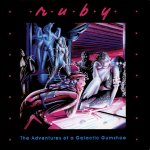
In closing I have to quote once again from my favorite Sci Fi radio show, Ruby: The Galactic Gumshoe. In it, a caller asks The Android Sisters, "Do androids dream of electric sheep?" Click HERE for an absolutely fabulous animation of the Android Sisters' routine. (Gawd, I *love* the internet!)


16 Days til Lift-Off

Monday, June 25, 2007

More Human Than Human


The 25th anniversary of Blade Runner has stirred up some thoughts on a subject that is becoming more and more relevant with each passing year, or perhaps more accurately with each new leap in technology. From the time Mary Shelley penned Frankenstein, science fiction has examined not only what makes us human (which is arguably what most fiction is about), but what makes our creations "human." When does a created being--a "monster", clone, robot, android, holographic projection, artificial intelligence--cross over and become, if not "human", then a person worthy of being granted the ever-elusive prize of "human" rights? Considering that many people on this planet have not yet achieved this status, it is no surprise that some people would have difficulty granting rights to something created by humans. Even some science fiction-minded individuals who have no difficulty recognizing aliens as "people" -- even those aliens so dramatically different from human as to be almost unrecognizable as "human", like a silicon-based lifeform, for instance-- find granting the same status to a created being problematic. The argument runs, as I understand it, that if something is created and programmed and what-have-you, it is a thing and not a person, no matter how much it may think, act, or look like a human. As my favorite galactic gumshoe puts it (referring to a damaged android who has been crying), "She's programmed to say she hurts!"

I find this question of sentience puzzling, for I am certainly not suggesting we grant "personhood" to pocket calculators and cell phones. Up to a point, the above argument is correct, at least concerning technology as we know it today. If you have ever had a conversation with an AI (they have them at various places online and some art exhibits), you'll know what I mean. I have had some frustrating encounters with such creatures and find them to be very stupid machines. But I digress.

What science fiction makes possible is the taking of an idea or a technology or both and projecting them out to a possible conclusion. As in the case of Blade Runner, what would happen if we were so successful in creating an artificial human, an android, that it took on a life of its own, developing memories, experiences, a range of emotions, and most especially, a desire to live? Other characters in movies and television who explore this idea are Data (Star Trek: Next Generation), the Doctor (Star Trek: Voyager), Terminator (Terminator 2), and David (A.I.). I'm sure there are more. And in books, of course, the list is endless; however, the master of them all would be Isaac Asimov. I recommend the novella "Bicentennial Man" and "Kid Brother," one of Asimov's short stories, among many others.

What fascinates me is the moment of transition: When does an android go from a collection of programmed knee-jerk reactions to a person? How does it happen? And why? Is this what we call a "soul"? Is this how new sentience evolves? It's about more than just intelligence; intelligence cannot be the only factor. My list for defining sentience is as follows (subject to revision):

self-awareness
creative expression
emotions/empathy
ability to dream and to wish
ability to learn
desire to live

I have not decided if one must possess all, or some, or at least two from the above list to be considered sentient. Something to think about.

Wikipedia has an interesting article on Sentience, if you're interested. In short, it says, "Some science fiction uses the term sentience to describe a species with human-like intelligence, but a more appropriate term for intelligent beings would be 'sapience'." The article also includes "free will" and "ability to experience suffering" in addition to some of those items I listed above.

More important, perhaps, than the "when" and "how" and "why" sentience/sapience develops is our own internalization of that process. Our attitude towards the Other determines our own humanity: When we deny sentience/sapience to an obviously sentient/sapient being, it is we who are diminished, not the opposite.

Deckard is astonished when Roy Batty saves his life. Had the situation been reversed, Deckard would have had to follow through with his orders to "retire" the android. In the end, it is the android that teaches the man a lesson in what it means to be human. For with his own death closing on him rapidly, Batty treasures each moment, each memory, and life itself.


"I have seen things you people wouldn't believe:
Attack ships on fire off the shores of Orion;
I've watched c-beams glitter in the dark near Tanhauser Gate.
All these moments . . . lost . . . in Time . . .
like tears in the rain."


22 Days til Lift-Off

Wednesday, June 20, 2007

What have they done to my Underdog?


I'm sorry, but a "live action" Underdog just does not NOT work for me.

Another childhood memory peddled to the lowest common denominator.

[Sigh!]

I will simply have to boycott this movie.


27 Days til Lift-Off

Tuesday, June 12, 2007

Cinema Etiquette 101


My son and I went to the movies last night--Ocean's 13. I haven't seen the first two, but that didn't seem to matter. I got up to speed fairly quickly and enjoyed the flick.

But that wasn't the problem. The problem was the rude teenage girls at the end of our row. One in particular kept talking on her cell phone and then running to the emergency exit. "Are you there yet? Is that you knocking?" She must have done this three times, letting in at least a half dozen or more conspirators.

The third time I leaned over and gave her a meaningful look. I think she got the hint, because she shut down her phone after that. But I was this close--*this close* I tell you--to going over there and giving her a piece of my mind. I'm not afraid of some twiggy little 15-year-old... with a dozen or so friends to back her up... I would have told her that if I heard another peep out of her or her friends or her damn phone I would tell the manager. I would have told her! Yeah.

Kids these days. [grumble]

You know, it's enough to make me want to stick to going out to Rated-R movies only, in order to avoid the adolescents. Unfortunately, they get in to see those movies, too. And then there are those *idiots* who bring their screaming babies.... Oh, and then there was some guy who was snoring--I mean *really* snoring-- about halfway through the flick. I am beginning to understand why most people just stay home and wait for the DVD.

Ocean's 13 was like ginger ale--sparkly, sharp, burns on its way down, with a nice gingery finish. Enough said.


35 Days to Lift-Off